DH Williams
PremiumJoined March 2026
2
Books
26K
Words Published
0
Followers
Published Books (2)
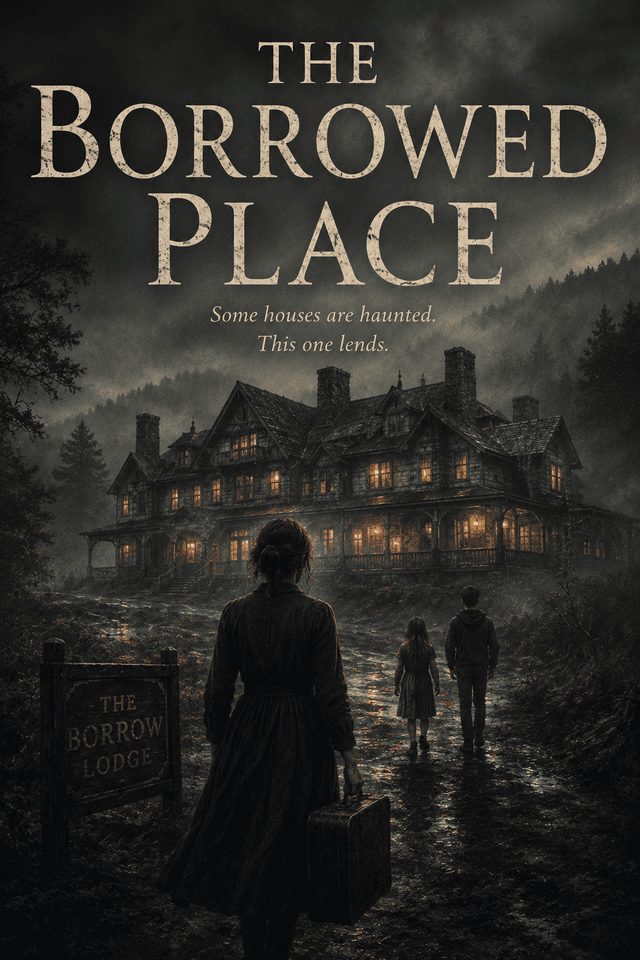
The Borrowed Place
Some houses are haunted. This one lends. --- Widowed and buried in the debt her husband left behind, Ada Mercer has one season to save the last thing he gave her: a grand, half-ruined lodge at the bottom of a Tennessee hollow the old families call the Borrow. Fix it, fill it, book it solid by spring — or the bank takes everything. It's a gamble she can't afford and can't refuse. The lodge doesn't rattle chains. It doesn't groan in the dark. It listens. And to each of them, very quietly, it offers the one thing they want most and would never say aloud. For seven-year-old Nell, it's a friend in the empty house — a girl who knows the place, who lost her own daddy once, and who promises that Daddy can come home, if they want him to. For fifteen-year-old Eli, it's the truth: small, ugly facts that won't stop adding up to a single unbearable question about how his father really died. And for Ada, it's the thing she has been refusing to look at for eighteen months — the gray smear at the center of her grief that she buried so deep she has nearly convinced herself it was never there. But the Borrow gives nothing away. It only lends. And the interest comes due in flesh, in time, in memory — and in people. By the time Ada understands what the house is, and what filling its rooms will cost the strangers who come down that road, she will be forced to choose between a truth that destroys her and a lie her family can live happily inside. The cruelest part: her own salvation and the ruin of the next desperate family are the same act. A descent in the tradition of Shirley Jackson and Stephen King, The Borrowed Place is a mountain-gothic about grief, debt, and the lengths a mother will go to keep from looking at what she's done — a novel that asks whether anyone can survive the truth, or only survive by refusing it.
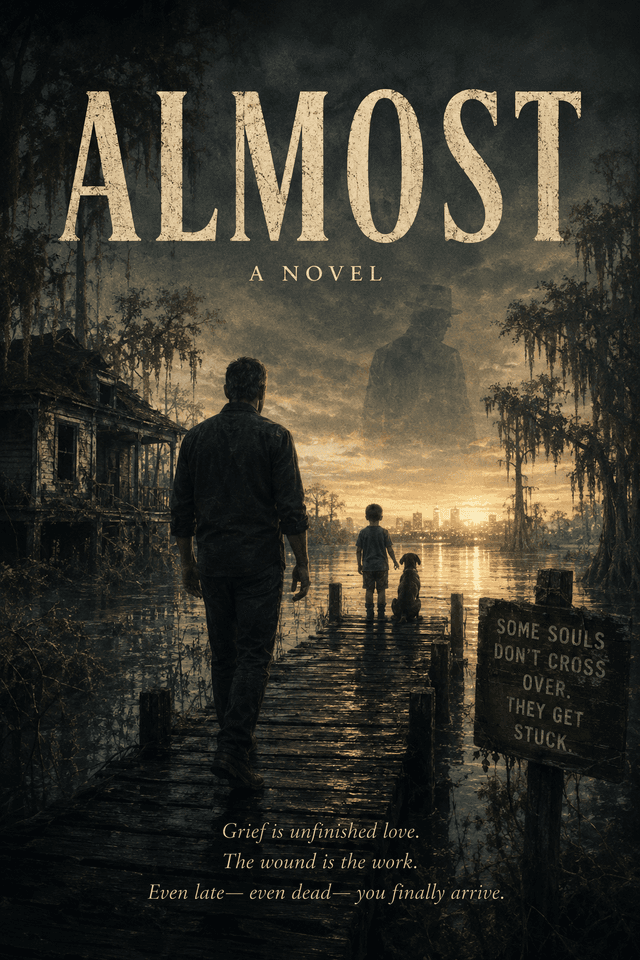
Almost: Book One - The Tethered
Joel Crane could find the rot behind any fresh coat of paint. Thirty-seven years a home inspector, he knew exactly how a house lies — the sag a seller painted over, the damp behind a clean wall — and he never once turned the instrument on himself. He kept his girlfriend provisional for a decade. He kept his own apartment like an exit he never used. When his neglected heart finally cashed in the warnings he'd filed away unread, he died alone on a Tuesday and was found days later, and the loneliness of it was the exact sum of the life. He didn't fully leave. Recruited by Vera Ashford — dead since 1924, dry as a closed door, rooted to the same pine-belt parish for a hundred years — Joel finds himself one of the tethered: the dead who linger to help stuck souls finish what they couldn't and move on. It's an under-resourced, disorganized, faintly absurd operation with no headquarters, no hierarchy, and no one, as far as anyone can tell, in charge. The only currency is attention. The only rule that works is honesty. And the work erodes you — soul by soul, grief by grief, until you go dim. His first case is a nine-year-old boy. Theo drowned going off a dock after his dog, Reggie, and he is frozen in the inch he couldn't cross — a hand still reaching, a search that can never end, because ending it means looking at the thing directly. Reggie is stuck too, waiting the way only a dog can wait. Each anchors the other in place. Neither can let go alone. And circling them both, in a rotting house the swamp is taking back, is something that was once a man much like Joel — a soul that refused connection until its longing curdled into hunger. To free the boy, Joel will have to do the one thing his every instinct forbids. He cannot force a soul onward. He cannot soothe one with a beautiful lie. He cannot rush the goodbye. He can only arrive — fully, on purpose, at the cost of the comfortable numbness that passed, for thirty-seven years, as being more or less fine. The man who spent a lifetime one degree removed from everything he loved must finally make the reach he refused, or watch a child become the very thing waiting for him in the dark. Set in the heat and rot and Catholic certainty of a Louisiana parish where a great city glimmers across the water — always almost in reach — Almost is a story about grief as unfinished love, about the wound that turns out to be the work, and about whether a life held just out of reach can still have meant something. It can. But only if, even late — even dead — you finally arrive.